A clamp-mounted magnifier with a 4-inch real glass lens, magnification up to 12X and a dimmable 2,200-lumen LED ring at 6,000K. The researchers behind the Ohio State tattoo study suggested a mounted magnifying glass so the artist does not lean in over the client, and leaning in is where the neck and upper back pain starts. The arm adjusts in any direction and the listing says a center screw keeps it from drooping. It clamps to a table or cart edge up to the size the clamp allows, so check the station first. A lens cover keeps dust off between clients. It will not fit every setup, and some artists already work under a ring light they like.
Pros
- Real glass lens, up to 12X
- Bright, dimmable light right over the work
- Matches a specific suggestion from the Ohio State study
Cons
- Needs a table or cart edge to clamp onto
- Bulky to move between stations
Best for: fine-line and detail work
A slim A4 light pad, about 5 mm thick and 12.6 by 9 inches overall, with flicker-free LEDs and a touch switch you hold to dim. It runs on USB from a laptop, power bank or wall adapter, and the listing names tattoo transferring among its uses. For a tattoo artist, a light pad turns a rough sketch or a client's photo into a clean line drawing for the stencil, and it lets them redraw flash without starting over. It is a small, practical upgrade for an apprentice who still traces at a window. It is not rechargeable, so it needs a cable, and a busy artist may want a bigger A3 pad for back pieces.
Pros
- Thin and light, slides into a portfolio
- Even, dimmable light
- Low price for a daily tool
Cons
- Needs a USB cable, no battery
- A4 is small for large pieces
Best for: drawing stencils and flash
An all-metal three-tier cart in black with three mesh baskets, two hanging cups, three hooks and 2-inch urethane wheels that the listing says roll on carpet or hardwood. In a shop it holds the things that pile up around a station: sketchbooks, paper towels, a phone, a speaker, spare stencil paper and the snacks for a long session. Because it rolls, the artist can pull it close and push it away when they change position. Keep it for supplies and personal items and let the artist decide what goes near the work area under their own setup rules. It needs assembly, and black mesh can look busy in a minimal studio.
Pros
- Rolls to wherever the artist sits
- Hooks and cups for small items
- Black finish suits most shops
Cons
- Needs assembly
- Mesh baskets let small items fall through
Best for: setting up a new station
A black waterproof apron, 23 by 27 inches, made of polyester with a thick PVC base. It closes with quick-release buckles and an adjustable strap instead of ties, and it has three zippered pockets, one large and two small. The listing sells it for barbers and stylists, and the same features suit a tattoo artist who works in street clothes and wants a wipeable layer between a shirt and the station. The pockets hold a phone, a pen and a marker for touching up a stencil. It is one size, so there is no guessing. PVC does not breathe, and in a warm shop some artists will find it hot by the end of a long sitting.
Pros
- Wipe-clean, waterproof fabric
- Buckles instead of ties
- One size for most people
Cons
- PVC runs warm
- Designed for salons, so pockets suit small tools
Best for: artists who work in their own clothes
A travel case built for a tattoo kit. The upper compartment has shock-absorbing padding for a machine, a stencil printer or a power supply, and two removable pouches with clear lids and adjustable dividers hold smaller items. It has sturdy handles, a detachable shoulder strap and a rear trolley sleeve that slides over a suitcase handle. For an artist who works conventions, guest spots or private sessions, one bag that keeps everything sorted saves a lot of setup time. It is a coworker-level gift with a clear link to the job. An artist with a big rotary collection may outgrow it, and it does not replace a hard case for air travel.
Pros
- Made for tattoo gear
- Removable pouches double as station organizers
- Trolley sleeve for airports and convention floors
Cons
- Soft case, not a hard shell
- Sized for a modest kit
Best for: conventions and guest spots
A 2-inch-thick, 17-inch round cushion insert with a top layer of ventilated, gel-infused memory foam over high-density support foam, CertiPUR-US certified. The listing sells it as a bar stool or pouf insert, which is the shape of the rolling stool many tattoo artists sit on. Ohio State researchers observed artists perching on low stools and leaning forward for sessions of one to three hours, and a single tattoo can take eight. A firmer, cooler seat will not fix posture, but it takes the edge off the third hour. Measure the stool first, since 17 inches is wide for some salon stools. It is an insert, so it may need a cover or a strap to stay put.
Pros
- Sized for round stools
- Gel layer stays cooler than plain foam
- Medium-firm, not mushy
Cons
- No cover or ties in the listing
- Check the stool diameter first
Best for: artists on a round shop stool
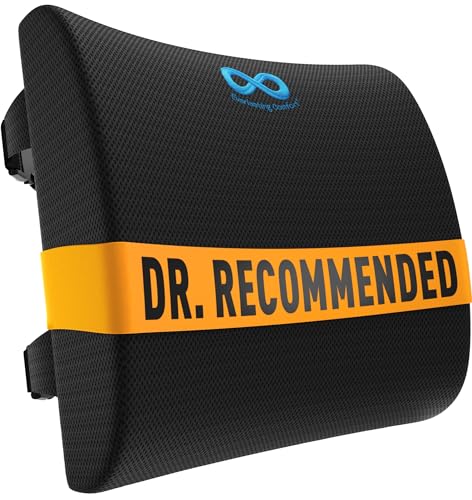
A contoured lumbar pillow made of high-density memory foam with two adjustable straps and extension pieces that fit chairs up to 32 inches wide. In the 2014 survey cited by Ohio State, 94% of tattoo artists reported back pain. Most of the tattooing happens on a stool with no backrest, so this pillow earns its keep in the other hours: drawing at the desk, answering messages, the drive to a convention. It is a solid gift from a coworker who has seen the artist stretching between clients. It will not attach to a backless stool, so do not oversell it as a tattooing aid.
Pros
- Firm memory foam that holds its shape
- Straps fit most chairs and car seats
- Easy, size-free gift
Cons
- Useless on a backless stool
- Plain look
Best for: drawing sessions and desk time
A corded shiatsu neck and back massager with kneading nodes that rotate in two directions, a built-in heat setting, an auto shutoff and a linen fabric cover. Ohio State researchers who wired up tattoo artists found the upper back and neck worked hardest, with the trapezius showing the most strain, and 85% of artists in an earlier survey reported neck pain. A massager for the couch after a session is a direct answer to that. It drapes over the shoulders or sits behind the lower back. It needs an outlet, so it stays home, and the kneading can feel strong on the highest setting.
Pros
- Targets the neck and trapezius
- Heat plus kneading
- Auto shutoff
Cons
- Corded, not portable
- Strong for some users
Best for: the couch after a long session
Eight water-based acrylic paint markers with a medium, reversible tip from 1.8 to 2.5 mm. The paint is opaque and layers without streaks, and it works on paper, canvas, wood, glass, metal and plastic, permanent on porous surfaces. Tattoo artists draw all day, and many paint flash sheets, shop signs, skateboard decks or sneakers on the side. POSCA markers are a common choice for that kind of bold, flat color. As a coworker gift they hit the right price and they get used. Eight colors is a starter set, so an artist who paints a lot may want the bigger pack, and paint markers need shaking and priming before the first stroke.
Pros
- Opaque color on almost any surface
- Reversible tip lasts longer
- Good price for a known brand
Cons
- Only 8 colors
- Needs priming before first use
Best for: painting flash and shop signs
A set of 48 alcohol-based markers with a brush tip on one end and a chisel tip on the other. The ink blends, and Ohuhu sells refills in 101 colors, so a favorite skin tone or shadow gray does not mean a new set. A tattoo artist uses markers like these to color a design on paper so a client can approve it before the appointment, and to fill in flash. They work well on marker paper, which keeps colors from bleeding through. Professional artists who already own Copic markers may see these as a backup set. For an apprentice building a kit, they are a generous coworker gift.
Pros
- Brush tip for smooth blending
- Refillable ink
- 48 colors in one case
Cons
- Pros with Copic sets may not switch
- Alcohol markers bleed on plain paper
Best for: color mockups for clients