A 60-minute analog timer that shows the time left as a colored disk that shrinks as the minutes pass. The listing says it runs silently, has an optional audible alert for sound-sensitive rooms, and is meant to be read at a glance by people of all ages and abilities, including those with autism or ADHD. That fits a pediatric or school-based OT who has to end a fine motor station and start handwriting without a meltdown. It also works on an adult rehab gym table to pace a set of exercises. The timer takes one AA battery, which is not included, so tape one to the box. The colored silicone covers in the photos are sold separately. Many clinics already own one, so this works best for a new grad or an OT setting up a home or school caseload.
Pros
- Silent, so it does not distract during sessions
- Readable from across a room
- Helps with transitions between tasks
Cons
- Battery not included
- Clinic may already have one
Best for: pediatric and school-based OTs
Four tubs of therapy putty in yellow, red, green and blue, from extra soft to firm, 3 oz each. The listing says the putty is made of silicone rather than natural rubber latex and does not stick to hands or dry out. OTs reach for putty for grip and pinch strengthening, finger isolation and as a calm-down fidget, so a clean personal set is useful even when the clinic stocks a bulk tub. It also travels well for a home health OT who sees clients in their kitchens. As a gift, it is practical and cheap, and an OT will know exactly what to do with it. It is not exciting to unwrap, so pair it with a card or a treat from the list below.
Pros
- Four resistance levels in one set
- Latex free silicone
- Small enough for a home visit bag
Cons
- Not a fun unwrap on its own
- Clinics often stock putty already
Best for: hand therapy and adult rehab
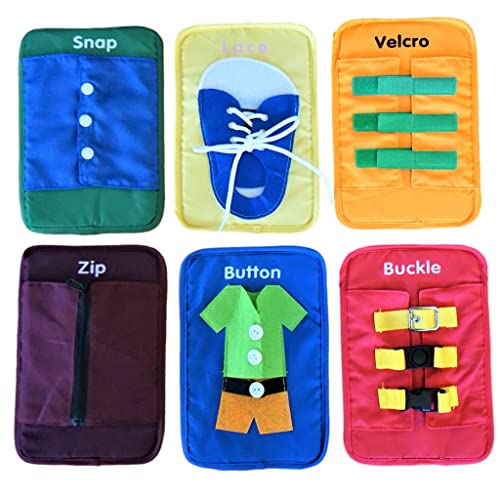
A soft busy board with six practice cards: snaps, three kinds of buckles, Velcro, a zipper, a button and a shoe lace. The listing says the fabric and buckles have extra length so kids can practice without fighting the tension, and the inserts come out for washing. Teaching self-care skills like dressing is one of the core jobs the Bureau of Labor Statistics lists for occupational therapists, so this is a gift that lands right in the treatment plan. It suits a pediatric OT in a clinic, a school or early intervention. An adult rehab OT will get less use from it, since it is sized and colored for young children. It is a fun one to hand over at a team Secret Santa, because everyone in the room will want to try the buckles.
Pros
- Matches a real OT goal: dressing skills
- Six skills on one board
- Washable inserts
Cons
- Made for kids, less useful in adult rehab
Best for: pediatric OTs working on self-care
A hard plastic storage clipboard with two compartments, each with its own latch, plus a separate pen holder and a clear top panel you can write on with a dry-erase marker. The listing describes it as heavy duty and break resistant. OTs record client progress for evaluations, billing and team updates, and the Bureau of Labor Statistics notes that some OTs work in schools and others travel to clients' homes. That means a lot of forms carried between classrooms, cars and kitchens. This clipboard keeps blank evaluation forms in one layer and finished notes in the other. It is bulky next to a plain clipboard, and an OT who charts only on a tablet will get less from it.
Pros
- Two latched compartments
- Pen holder built in
- Dry-erase top for quick notes
Cons
- Bulkier than a plain clipboard
- Less useful for all-digital charting
Best for: home health and school OTs who chart on the go
A structured organizer that straps to the passenger seat and holds hanging files, with movable dividers for bottles, tissues or supplies. The angled hard cover doubles as a desk with corner straps for a writing pad or a small tablet, and side handles let you move it to the back seat. The listing names home health work as a use. The Bureau of Labor Statistics counts 8% of OT jobs in home healthcare and notes that some OTs travel to clients' homes, so a share of OTs spend their day in a car between visits. This turns that car into a working office. It is large, so it takes the whole passenger seat, and a clinic-based OT will not need it.
Pros
- Hanging files and dividers
- Lid works as a car desk
- Built for mobile work
Cons
- Takes the whole passenger seat
- Only useful for OTs who drive to clients
Best for: home health OTs
A 3 oz hand cream that the listing describes as non-greasy and fast absorbing, made to help protect chafed, chapped or cracked skin, especially frequently washed or over-worked hands. It has ceramides, hyaluronic acid, niacinamide and dimethicone, and carries the National Eczema Association seal. OTs put their hands on clients all day: splinting, range of motion, transfers, feeding practice. That means washing and sanitizing between every session. A cream that soaks in quickly matters, because nobody wants slippery hands during a transfer. It is a small, plain gift, so it works best as a budget pick, a stocking stuffer or an add-on to a mug.
Pros
- Made for frequently washed hands
- Absorbs fast, good before hands-on work
- Easy budget pick
Cons
- Plain gift on its own
- Some people prefer a scented cream
Best for: any OT with dry, cracked hands
A corded pillow-style massager that drapes over the neck and shoulders. The listing says its kneading heads turn in two directions with one button, it has a built-in heat setting and an auto shutoff, and it is covered in linen fabric. The Bureau of Labor Statistics says occupational therapists have one of the highest rates of injuries and illnesses of all occupations, because they lift and move clients and heavy equipment and spend much of the day on their feet. A massager will not change that, but it makes the end of a heavy day on a rehab unit or in a skilled nursing facility more pleasant. It needs an outlet, so it stays on the couch, not in the car.
Pros
- Heat plus kneading
- Simple one-button control
- Feels like a treat, not a work tool
Cons
- Corded, so it needs an outlet
- Not for use during the workday
Best for: OTs who do transfers all day
A 20 oz stainless steel tumbler with an occupational therapy design built around the line in its title, Work of Heart, Help Small Hands. The listing describes it as reusable and hand wash only, sized for coffee, tea or water. The design speaks to pediatric and school-based OTs, the ones who spend the day on pencil grasp, scissors and buttons. The Bureau of Labor Statistics counts 13% of OT jobs in educational services, so that crowd is large. As a coworker gift, it shows you know what this OT actually does, and it gets used on the drive between schools. An OT in adult rehab may not connect with the small-hands theme, so pick the unicorn mug or the coloring book for them.
Pros
- Specific to pediatric OT
- Holds 20 oz for a long morning
- Useful and personal at a coworker budget
Cons
- Hand wash only
- Theme misses adult rehab OTs
Best for: pediatric and school OTs
A pocket bundle of 74 double-sided reference pages on waterproof PVC cards, about 3 by 4.7 inches. The listing says 42 pages cover adult rehab, including manual muscle testing, range of motion, spinal cord injury maps, cranial nerves and SOAP notes, and 32 cover pediatrics, including milestones and reflexes. The Bureau of Labor Statistics says OT master's programs include supervised fieldwork, and fieldwork is where a student has to recall a normal range of motion in front of a supervisor. These cards fit in a scrub pocket or clipped to a clipboard. A seasoned OT will not need them, so give them to a student, a fieldwork student your clinic hosts or a first-year grad.
Pros
- Adult and pediatric in one bundle
- Waterproof and wipeable
- Pocket size
Cons
- Unbranded seller
- Too basic for experienced OTs
Best for: OT students in fieldwork and new grads
Apple's base 11-inch iPad with the A16 chip, 128GB of storage, Wi-Fi 6, 12MP front and back cameras and Touch ID. The listing notes support for Apple Pencil (USB-C) for handwriting and drawing, and the Magic Keyboard Folio as an add-on. OTs record client progress for evaluations and billing, and many pediatric OTs use tablet apps for handwriting, visual-motor and home exercise programs. A personal iPad lets an OT build materials at home without borrowing a work device. Check first: some employers require a work-issued device for patient records, so frame this as a gift for planning, continuing education and personal use. Pencil, case and keyboard cost extra.
Pros
- Pencil support for handwriting work
- Fast enough for years of use
- Light enough for a home visit bag
Cons
- Pencil and case cost extra
- Employer may not allow it for patient records
Best for: a spouse or family of a pediatric or home health OT