A hand chime with three aluminum rods on a wooden base and a striker, sold as a classroom attention getter and a meditation chime. A preschool day runs on transitions: free play to cleanup, cleanup to circle, circle to snack, snack to outside. The Bureau of Labor Statistics describes preschool teachers setting schedules and organizing activities for groups, and every change between them needs the room's attention. A calm three-note tone works better than a raised voice and saves the teacher's throat for songs. Children learn quickly that the chime means stop and look. Some classrooms already use a bell or a light, so ask first if you can. The tone carries in a normal classroom but will not cut through a gym.
Pros
- Calm tone saves the teacher's voice
- Simple enough for children to learn the signal
- Wood and aluminum, no batteries
Cons
- Some rooms already have a signal
- Not loud enough for a gym or playground
Best for: circle time, cleanup and transitions
A 60-minute mechanical countdown timer, 7.5 inches across, with a blue disk that shrinks as time runs out and a magnetic back for a whiteboard or a fridge, per the listing. It needs no batteries. Preschool children have no sense of how long ten minutes is, and a visual timer turns cleanup, center rotations and turn-taking into something they can see. The teacher sets it, points at it and stops answering how much longer. The listing recommends it for special education and K-12 teachers, and it fits a pre-K room just as well. A mechanical timer ticks less than a cheap kitchen timer but is not silent in every unit. Many teachers own one, so a second for another center still gets used.
Pros
- Children see time run out
- No batteries
- Magnetic back for a whiteboard
Cons
- Some teachers already own one
- Only counts up to 60 minutes
Best for: teachers who use timed centers and cleanup
Six plush animal hand puppets with working mouths, made from washable, child-safe fabric, per the listing. The title and the bullet points name different animals, so expect a mix of farm and zoo friends. The Bureau of Labor Statistics notes that preschool teachers use play to teach, for example through storytelling and rhyming games, and puppets turn circle time into a show. A shy child will often answer a puppet before a grown-up. Teachers use them to model sharing, act out a book or say good morning. The set suits a classroom more than a teacher's home, so it works best from a class or a family who knows the room could use more. Check the center's rules for washable toys.
Pros
- Six puppets, enough for a small group
- Moving mouths for storytelling
- Washable fabric
Cons
- Animals in the box may differ from the title
- A gift for the room, not the teacher
Best for: circle time and story corners
A picture book from the Kissing Hand series. The story follows Chester Raccoon, who is afraid to start school, and his mother, who kisses his palm so he can carry her love with him. Many preschool teachers read it in the first weeks of the year, when drop-off brings tears and new routines. It also helps when a new child joins mid-year. A book for the classroom library is a gift a teacher can use the next morning, and a parent can write a note inside the front cover so it stays with the class. Teachers who have taught for years may already own a copy, so ask, or pick another title from the same series. The listing gives only the title and series, not page count or format.
Pros
- A read-aloud for the first weeks of school
- Room for a note inside the cover
- Easy for a family to give
Cons
- Many veteran teachers already own it
- Listing gives few details on format
Best for: the first weeks of school and new students
A thermal laminator with two heated rollers and two temperature settings that takes documents up to 9 inches wide and laminates about one letter-size page per minute, per the listing. Preschool teachers make most of their own materials: name cards, picture schedules, cubby labels, matching games and job charts. A sheet of paper lasts a day in a room of four-year-olds; laminated, it lasts the year and wipes clean. A school laminator, where there is one, sits in the office down the hall. A personal one lets the teacher prep at home on a Sunday. It needs laminating pouches, which are not listed as included, so add a pack. It takes letter-size paper, not posters.
Pros
- Makes materials last the year
- Two temperature settings
- Small enough for a home desk
Cons
- Pouches likely sold separately
- Only 9 inches wide
Best for: teachers who make their own name cards and picture schedules
A physical Starbucks gift card mailed active and ready to use at most Starbucks locations, per the listing. Teachers polled by a parent for an Edutopia column named coffee shop cards and a hot coffee handed over at drop-off among the gifts they appreciated, and all of them valued a handwritten note most. A card in an envelope with a note from the child covers both. It needs no size, no shelf space and no knowledge of the teacher's taste. The downside is that it feels less personal, so the note matters more than usual. Check first if the teacher has a Starbucks nearby, and check your school's gift rules, since some programs limit cash-like gifts.
Pros
- Welcome, simple and easy to mail
- Pairs with a handwritten note
- No taste or size to guess
Cons
- Feels impersonal without a note
- Some programs limit gift cards
Best for: parents who want a simple, welcome thank-you
A low rolling stool, 9 inches high overall, with a 12-inch cushioned seat and 360-degree swivel wheels that the listing says glide on tile, hardwood and laminate without scratching. It is sold for floor-level chores, but the height fits a preschool room, where tables and chairs sit at a child's knee level. The Bureau of Labor Statistics calls the job physically demanding, and much of that is bending and kneeling to be at eye level with children. A teacher on a rolling seat can move from the play-dough table to the puzzle table without standing up. Ask the director first, since some programs restrict furniture brought from home. It is low, so a tall teacher may find it awkward.
Pros
- Child-height seat with a cushion
- Rolls between low tables
- Floor-safe wheels
Cons
- Program may limit furniture from home
- Too low for some tall adults
Best for: teachers who sit at child-height tables all day
A self-inking rubber stamp you customize with the teacher's name or a short message in a library design, available in four sizes and five ink colors, per the listing. The ink pad is built in and the cartridge can be replaced. Preschool teachers often build their classroom library with their own money, and books travel: to the cozy corner, to the sink, to a backpack on a Friday. A stamp inside the cover gets them back. It is personal without being sentimental, and teachers who like it tend to use it for years. Order early, since a custom stamp takes production time. A floral design suits some teachers more than others, so look at the options before you pick.
Pros
- Brings borrowed books back
- Self-inking, no separate pad
- Several sizes and ink colors
Cons
- Needs production time
- Design choice is a matter of taste
Best for: teachers with a classroom library
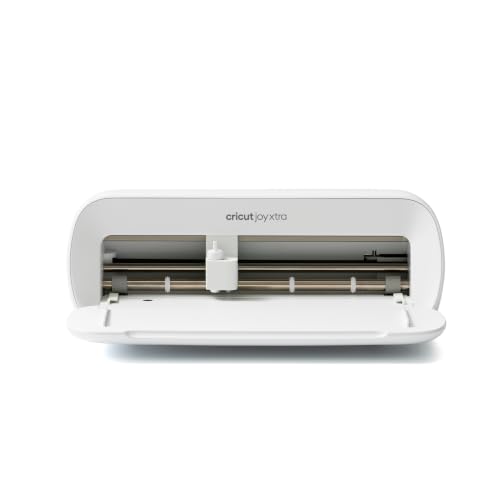
A compact smart cutting machine bundled with a fine-point blade, a pen, a weeder, cables and 30 bonus images in Cricut's Design Space app, per the listing. It works with more than 50 materials, including vinyl, iron-on, cardstock and sticker paper, and its Print Then Cut feature makes full-color stickers with most inkjet printers. Preschool teachers spend evenings cutting cubby labels, bulletin board letters, name tags and shapes for crafts. A machine does the cutting while the teacher does something else. It costs more than one family should spend, so it suits a spouse or a class that pools money. Some designs need a paid Cricut Access subscription, and there is a learning curve with the app.
Pros
- Cuts labels and letters in minutes
- Works with vinyl, cardstock and stickers
- Print Then Cut for custom stickers
Cons
- Some designs need a paid subscription
- App takes time to learn
Best for: a crafty teacher who makes her own labels and decor
A single-serve K-Cup coffee maker less than 5 inches wide that brews any cup size between 6 and 12 ounces, per the listing. It has a one-cup reservoir, so you add fresh water for each brew, and the cord tucks away for storage. Preschool and early learning programs often open early for working parents, and the teacher who opens the room needs coffee before the first child walks in. A one-cup machine on the kitchen counter saves the stop on the way. It also fits a staff room or a classroom where the director allows small appliances. The one-cup reservoir means a refill every time, and pods cost more per cup than ground coffee.
Pros
- Fits a narrow counter
- Brews 6 to 12 oz
- Cord storage for a move
Cons
- Refill water for each cup
- Pods cost more per cup
Best for: a teacher who leaves home before the sun is up