Sharpie's Pro Industrial line is made for labs and shop floors, and the listing says so directly: specially designed for industrial and laboratory users. The fine-point ink withstands heat up to 500°F, dries fast and resists water, fading and smearing on glass, metal, film and plastic. That is the list of surfaces a chemist writes on between breakfast and lunch: vials, beakers, sample bags and freezer boxes. A box of twelve lasts a while and disappears into a shared drawer, which is exactly why a chemist will thank you for having their own. It is a practical gift, so pair it with a mug or a book if the occasion needs some fun. Solvents like acetone can still lift any marker, so lab tape remains useful.
Pros
- Made for lab and industrial use
- Holds up to heat and water
- Twelve markers for the drawer
Cons
- Plain to unwrap
- Strong solvents can still lift ink
Best for: labeling glassware and samples
Heathrow Scientific makes lab supplies, and this pocket timer is built for the bench. It runs four countdowns at once, each set on its own or together, with an audible beep and a flashing light when time is up. A top button toggles between the channels and a clock. It clips to a lab coat pocket with a spring clip or sticks to a fume hood sash with its magnetic back. Chemists juggle reflux times, extraction steps, incubations and instrument runs, and a phone does not belong next to an open flask. Four channels cover a busy afternoon. The beep is modest, so it may get lost in a loud instrument room.
Pros
- Four timers at once
- Clip and magnet mounting
- Made by a lab supply brand
Cons
- Beep can be quiet in a noisy room
Best for: running several reactions at once
O'Keeffe's Working Hands is a concentrated hand cream sold for extremely dry, cracked skin, and this pack has two 3-ounce tubes. The BLS notes that chemists wear protective clothing such as gloves when handling hazardous chemicals, and long days in nitrile gloves plus constant hand washing leave hands raw by winter. One tube lives in the office drawer, the other at home. The cream works by leaving a protective layer on the skin, according to the listing. Apply it outside the lab and let it soak in before gloving up, since lotion under gloves can feel greasy. It is plain-looking, so it works best as a thoughtful extra rather than the whole gift.
Pros
- Two tubes for work and home
- Made for very dry hands
- Low cost
Cons
- Plain to unwrap
- Use outside the lab
Best for: hands dried out by gloves and washing
This is a 16-ounce beaker made from borosilicate glass, with a handle, graduation marks and a printed caffeine molecule. It looks like the glassware a chemist handles all day, which is the joke, and the listing notes the marks read correctly up to 400 mL. Keep it in the break room or on the office desk: labs ban food and drink at the bench, and the last thing a chemist wants is a coffee beaker mixed up with a real one. Thin glass looks great and lets you see the latte, but it is less forgiving of a knock than a ceramic mug. As a Secret Santa gift for a chemist, it hits the right mix of science joke and daily use.
Pros
- Looks like real lab glassware
- Caffeine molecule print
- Large 16 oz size
Cons
- Thin glass needs care
- Keep it out of the lab
Best for: the break room coffee
The Chemex is a one-piece borosilicate glass coffeemaker with a wooden collar, and it looks at home next to an Erlenmeyer flask. The listing says the glass is non-porous and will not absorb odors or chemical residues, a line a chemist will appreciate. Pour-over coffee rewards careful ratios, water temperature and timing, which turns a coffee break into a small, repeatable experiment. The six-cup size makes enough for a chemist and a lab mate in the break room. Filters are sold separately, so add a box of Chemex bonded filters to the gift. It takes more attention than a drip machine, which suits someone who enjoys precise work and less so someone who wants coffee in thirty seconds.
Pros
- Lab-glass look and borosilicate glass
- Brews for two or three
- A coffee hobby with a method
Cons
- Filters sold separately
- Slower than a drip machine
Best for: a chemist who treats coffee as an experiment
Ion is a pick-and-pass card game from Genius Games. Each round, players draft ion cards and combine them into neutrally charged compounds, with points for compounds, noble gases and goal cards. A game takes 20 to 30 minutes for two to seven players, which fits a lunch break. Chemists will find the chemistry trivial, which turns out to be the fun part: the game becomes about strategy and blocking, and the chemists can explain to everyone else why sodium chloride is worth so much. It also works for a chemist with kids or a chemistry teacher in the family. Hardcore board gamers may find it light, so treat it as a quick social game.
Pros
- Real ionic bonding rules
- Quick for a lunch break
- Plays up to seven
Best for: lunch-break games with the lab group
LINKTOR's kit has 444 pieces: 136 atoms, 158 bonds and 150 parts for a C60 fullerene. It builds ball-and-stick models and space-filling models with atoms drawn to scale, and the listing pitches it from seventh grade to graduate level. Chemists who teach labs, mentor interns or explain a reaction to a project team use models more than they admit, since a plastic chair conformation settles arguments that a whiteboard sketch cannot. The fullerene is a fun weekend build for the office shelf. The pieces are student grade, so an organic chemist used to a premium set may notice the fit. For a coworker gift under $25, it covers a lot of structures.
Pros
- 444 pieces including a C60 build
- Two model styles
- Good for teaching moments
Best for: explaining structures to students and interns
Ignition! is John D. Clark's informal history of the search for liquid rocket propellants, written by a chemist who worked on them. It is famous among chemists for its humor about compounds that did not want to be handled, and Rutgers University Press keeps it in print. For a synthetic or industrial chemist, it is a book they will quote at lunch. It is an old book with lots of chemical names, so a non-chemist may find it hard going. That narrows it to the chemists themselves, which is who this page is for. As a coworker gift it costs little and carries a lot of goodwill.
Pros
- A chemist favorite for humor
- Cheap and easy to wrap
- Great lunch-table stories
Best for: synthetic chemists
A heavy 11-ounce porcelain mug printed with The Hood Life Chose Me, a joke about the fume hood where synthetic and analytical chemists spend much of their day. The listing describes a thick, dense body that keeps drinks warm a little longer, and it is dishwasher and microwave safe. Most chemistry jokes are about the periodic table, so this one stands out because it comes from the daily routine of the lab. It reads as an inside joke to a chemist and a mystery to everyone else, which is part of the fun. Coworkers outside the lab may need it explained. The brand is small, so order early for a holiday swap.
Pros
- Joke from real lab life
- Thick, heavy porcelain
- Dishwasher and microwave safe
Best for: an organic chemist at the hood all day
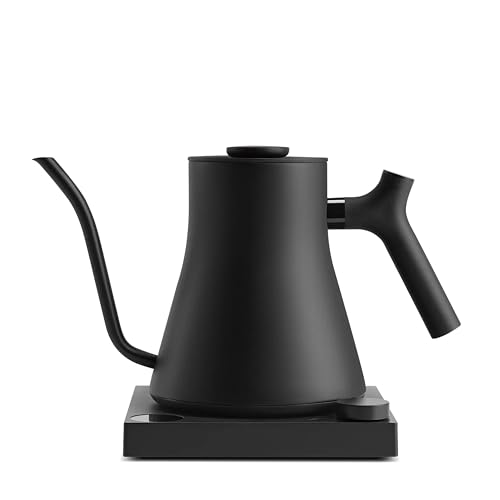
Fellow's Stagg EKG Pro is a 0.9-liter gooseneck electric kettle with to-the-degree temperature control, a high-resolution screen and a built-in brew timer. The gooseneck spout pours a thin, steady stream for pour-over coffee, and the exact temperature setting suits green tea and other drinks that scald easily. For a chemist, it turns the morning cup into the same kind of controlled process they run at work, without the safety glasses. It pairs with the Chemex or the HARIO set on this page. The price puts it in family territory, and it has a small capacity for a crowd. If they already own a good gooseneck kettle, the Baratza grinder below makes a better upgrade.
Pros
- Temperature to the degree
- Brew timer built in
- Steady pour from the gooseneck
Cons
- Pricey for a kettle
- 0.9 liters is small for a group
Best for: pour-over at home