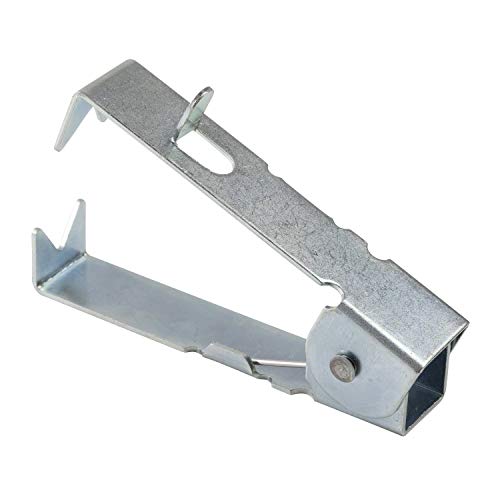
A rose thorn stripper forged from carbon steel in Sanjo, Japan, a town known for blades. You close it around the stem and pull down, and the listing says thorns and lower leaves come off in one motion. A finger rest keeps the grip steady through bunch after bunch, and at 4.2 inches it fits in an apron pocket. O*NET lists trimming material and arranging bouquets among the top tasks for floral designers, and roses are the flower that hurts. Most shops use cheap plastic strippers that wear out by February. This one is a small upgrade a florist would not buy for themselves. Carbon steel needs a wipe after use, or it can rust, which is worth saying in the card.
Pros
- Strips thorns and leaves in one pull
- Fits an apron pocket
- Made to last longer than plastic strippers
Cons
- Carbon steel needs drying after use
Best for: Valentine's Day rose orders
Sakagen's Hand Creation floral scissors, made in Japan and sold here by a Kyoto shop. The listing describes fluorine-coated blades that resist rust, an ergonomic handle meant to cut down hand fatigue, a size of 6.7 by 4.3 inches and a weight of 4.8 ounces, and it notes a Japan Good Design Award. O*NET reports that 86% of floral designers use their hands to handle tools almost all day. A florist cuts thousands of stems in a holiday week, so a good pair of scissors matters more than most gifts. They come in several colors, which helps in a shop where everyone grabs the nearest pair. Some florists are loyal to their own snips, so this works best as a second pair or for someone who has mentioned wanting Japanese shears.
Pros
- Light and balanced in the hand
- Rust-resistant coated blades
- Comes in colors that are easy to spot
Cons
- Some florists stick with their own brand
Best for: a florist who cuts stems all shift
Six-inch pruning snips from Fiskars with stainless steel micro-tip blades that the listing says cut all the way to the tip, a sheath and a lifetime warranty. They are not fancy, and that is the point. In a flower shop, snips disappear into buckets, pockets and delivery vans, and nobody can find a pair at 7 a.m. on Mother's Day weekend. A cheap, sharp, well-known pair makes a good budget gift from a coworker or a stocking stuffer for the whole design team. The narrow tip suits cleaning up foliage and cutting delicate stems. For thick woody branches a florist will still want heavier shears or the stem cutter in the premium section.
Pros
- Sharp to the tip
- Sheath and lifetime warranty
- Easy to give one to each designer
Cons
- Too light for thick woody stems
Best for: a spare pair for the cooler or the delivery van
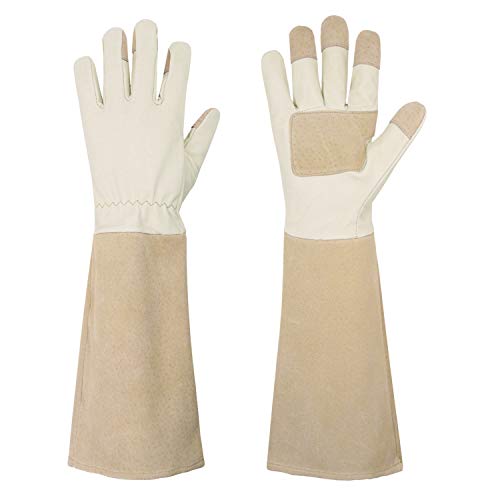
Pigskin leather gloves with a gauntlet cuff that the listing says reaches to just below the elbow, plus padded palms and fingertips for puncture resistance. Florists strip roses with tools, but they still handle rose bundles, holly, pine and branch work by hand, and the forearms take the scratches. O*NET reports that floral designers get minor cuts, burns or stings, and about one in seven say it happens weekly. Pigskin stays soft after it gets wet, which matters in a shop where everything is damp. The catch is fit: gloves come in sizes, and thick leather is clumsy for fine work like corsages. Treat these as processing gloves for the back room, not design gloves for the counter.
Pros
- Long cuff protects the forearms
- Stays soft after getting wet
- Padded palm and fingertips
Cons
- Comes in sizes, so you need a guess
- Too thick for fine corsage work
Best for: processing boxes of roses and branches
O'Keeffe's Working Hands cream in a 10-ounce pump jar. The listing describes it as concentrated, unscented, non-greasy and hypoallergenic, and the pump means one push instead of scooping with a wet finger. Florists spend their days processing stems in cold bucket water, washing buckets and handling cut foliage, and the holiday rushes come in the driest months of the year. An unscented cream also makes sense in a shop where the customer should smell the flowers, not the lotion. The pump jar is big, so it suits the back room sink better than an apron pocket. For a florist who wants something to carry, add a small tube from the same brand.
Pros
- Unscented, so it does not compete with the flowers
- Pump works with wet hands
- Large jar lasts a season
Cons
- Too big to carry in an apron
Best for: the back room sink
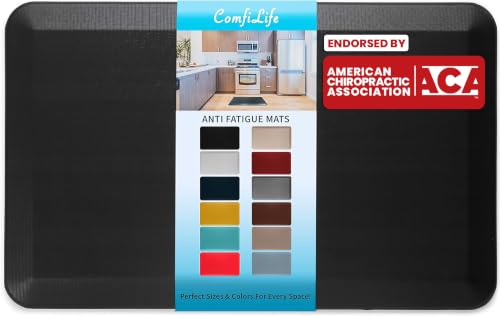
An anti-fatigue mat from ComfiLife made of 3/4-inch high-density memory foam, with a non-slip backing and a stain-resistant surface that wipes clean with a damp cloth. O*NET reports that 73% of floral designers stand continually or almost continually, and the rest stand more than half the time. Shop floors are usually concrete or tile, and on a holiday week the shifts run long. A mat at the design table or the wrap station is the gift a florist feels by the end of the first day. The stain-resistant top matters, since stems drip and leaves fall all day. It is a little plain to unwrap, so add a card. Measure the space first: a shop with a very narrow aisle may need a smaller mat.
Pros
- Used every shift
- Wipes clean of water and leaves
- Non-slip on wet floors
Cons
- Plain to unwrap
- Check the size against the work space
Best for: the design table or the wrap station
Six matte black plastic buckets, 13.25 inches tall, with square bases that the listing says resist tipping and hold water without leaking. Florists use buckets for everything: conditioning stems after a delivery, holding finished arrangements in the cooler, carrying flowers to a wedding and showing stems at a market stall. The tall shape supports long-stemmed roses and branches. The black finish looks tidier at an event than a stack of mismatched white pails. It is not a glamorous gift, but an event florist who borrows buckets from the grocery store every June will understand it right away. It works best as a gift from a coworker who knows the shop is short, or for a florist starting out on their own.
Pros
- Tall enough for long stems
- Square base resists tipping
- Matching set looks tidy at events
Cons
- Not exciting to unwrap
- Takes shelf space when empty
Best for: weddings, markets and the cooler
A Year in Flowers comes from Floret Farm, a flower farm whose books and seeds many florists and growers follow. The subtitle sums it up: designing arrangements for every season. A working florist already knows the basics, so the value is in seasonal thinking: which stems shine in each month and how to build a design around them. That matters to shop florists who buy from local growers and to event florists who plan weddings a year ahead. It is a good-looking book, so it doubles as something to leave out in a consultation room. A florist who mainly does sympathy work or grocery-store volume may find it more inspiring than practical.
Pros
- Seasonal ideas a florist can use
- Looks good in a consultation room
- Well-known grower behind it
Cons
- Garden style may not fit every shop
Best for: a florist who loves seasonal, garden-style work
A flat acrylic ornament cut in the shape of a small flower shop, printed in full color with a striped awning, buckets of roses, tulips and daisies, a chalkboard and a crate of flowers. The sign above the door carries the name you enter when you order. The BLS reports that 14% of floral designers are self-employed, and many more dream of their own shop, so a florist's name on a shop front lands well. It also suits a shop owner from the staff, with the shop's real name on the sign. It is printed to order, so allow extra days before Christmas and check the spelling. It is acrylic rather than glass, which means it survives a busy studio tree but looks less like an heirloom.
Pros
- Their name on a flower shop sign
- Works for staff or owners
- Under most Secret Santa limits
Cons
- Printed to order, so allow time
- Acrylic, not glass
Best for: a shop owner or a long-time designer
A bench-top stem cutter from Floral Home with a weighted base that the listing says needs no mounting. It cuts fresh flowers and wired artificial stems, and the brand sells versions with different blades. A florist processing a wholesale delivery cuts every stem before it goes in water, and before Valentine's Day or Mother's Day that means thousands of cuts in a few days. A bench cutter turns that into a fast lever action and saves the wrists. It is a big purchase for one coworker, which is why it sits here as a team or family gift. It suits a shop or a busy event florist better than a designer who works mainly at a counter. Check the blade option on the listing before ordering.
Pros
- Speeds up bulk stem processing
- No mounting needed
- Handles wired artificial stems too
Cons
- Costs more than one coworker should spend
- Overkill for a small studio
Best for: a shop owner processing bulk deliveries