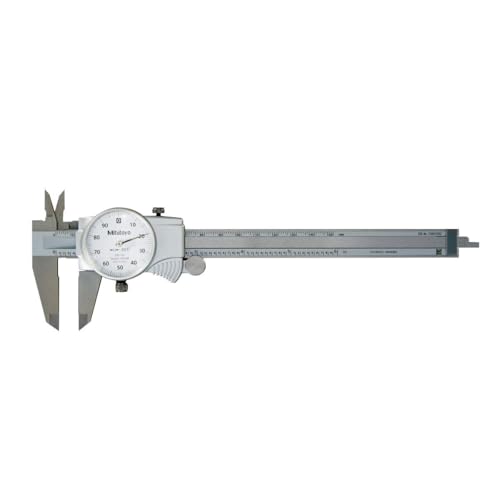
A 0–6 inch stainless digital caliper from iGaging, a brand many home and shop machinists already know. The listing highlights an absolute origin feature, so the caliper keeps its zero reference after it turns off, plus inch and metric modes, an IP54 rating against dust and moisture, and an SPC/USB data port for sending readings to a computer. For a machinist, calipers are the tool that comes out of the pocket fifty times a shift, and most keep a spare at a second machine or at home. It comes in a protective case with a manual. It will not replace a micrometer for tenths work, and a machinist with a favorite Mitutoyo may treat this as the backup. As a coworker gift, it is useful on day one and easy to explain.
Pros
- Keeps its zero after power-off
- IP54 rating suits a coolant-wet shop
- Case included for the toolbox
Cons
- Not a substitute for a micrometer on tight tolerances
Best for: first-article checks at the machine
A single-end mechanical edge finder from Brown & Sharpe with a 3/8 inch shank and a 0.200 inch contact head. The listing says the head is held to ±0.0005 inch of nominal size and made from hardened steel, and that the tip kicks off visibly when it meets the edge of the workpiece. Manual machinists and toolroom hands use an edge finder at the start of nearly every mill job, and they tend to lose or drop them, so a spare from a name brand lands well. It is small and simple to wrap. A CNC operator who sets work offsets with a touch probe will get less use from it, and anyone with a combo edge and center finder already has the same job covered.
Pros
- Name brand with a tight tolerance on the head
- Fits a standard 3/8 inch collet
- Easy add-on to a larger gift
Cons
- Less useful on a CNC with a touch probe
Best for: manual mill setups
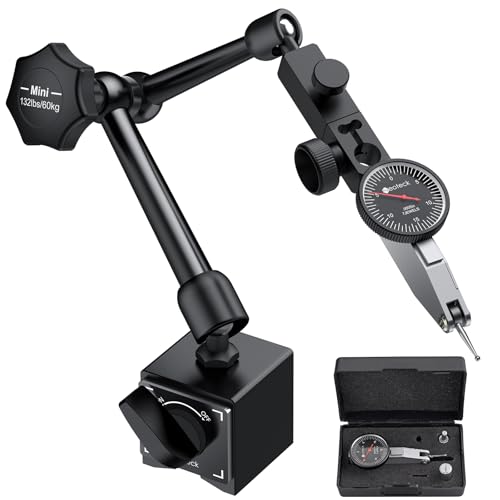
A starter test indicator kit from Neoteck: a 0.03 inch dial test indicator with 0.0005 inch graduations and a magnetic base with an on/off switch, rated at 132 pounds of pull, plus an adjustable two-section arm and a plastic storage box. Machinists use a test indicator to sweep a vise jaw, center a part in a four-jaw chuck or check runout, so a spare at a second machine saves walking across the shop. It suits an apprentice building a first toolbox. A journeyman who owns a Mitutoyo or Starrett indicator will likely keep this one as a backup or at home, since the precision grade is not the same.
Pros
- Indicator and base in one boxed gift
- On/off magnet sets up on any steel surface
- Good first indicator for an apprentice
Cons
- Veterans may prefer a premium indicator for tenths work
Best for: tramming vises and indicating parts
A swivel-blade deburring tool with a red anodized aluminum handle and 11 M2 high-speed steel blades, all in a storage case. The listing says the handle is CNC machined, the head swivels a full 360 degrees and the blades are hardened to HRC 62–64. Machinists break the edges on nearly every part before it leaves the machine, and a deburr tool is one of those items that disappears into someone else's toolbox. The spare blades make this a set that lasts a long time. It costs little, so it works as a Secret Santa gift on its own or as an add-on to the caliper or a mug. A machinist who deburrs mostly with a file or a countersink will use it less.
Pros
- Used on almost every part
- Eleven blades in the box
- Small enough to pair with another gift
Cons
- Plain to unwrap on its own
Best for: breaking edges on finished parts
A magnetic pickup wand from Evolution Power Tools built for metal swarf. The listing says it can collect up to 6.5 kg of shavings, scraps or dropped parts, and a plunger switches the magnetic hold off so the chips fall into the bin. Steel chips are sharp and hot, and Cornell's lathe safety guide tells machinists not to clear chips with bare hands. A wand like this handles the floor around a machine, a bench after drilling and the dropped drill bit that rolled under the mill. It does nothing for aluminum, brass or stainless chips that are not magnetic, so it fits a shop that cuts mostly steel. A good gift from a lead hand who has watched someone sweep chips with a glove.
Pros
- Keeps hands away from sharp swarf
- Plunger drops chips where you want them
- Useful at work and in a home shop
Cons
- Works only on magnetic chips
Best for: cleanup at the end of a shift
An 8 oz bottle of barrier cream from CoreTex, made in the USA. The listing says the cream forms a protective layer that repels common workplace substances such as grease and adhesives for up to four hours, absorbs quickly, leaves no greasy residue and has no overpowering scent, so grip on a part or a handwheel stays secure. Machinists handle oily stock, coolant-soaked parts and cutting fluid all shift, and cracked, dry hands are a common complaint in the trade. Rub it in before the shift and again after lunch. It is a practical gift and not a flashy one, so pair it with a treat. A machinist who wears nitrile gloves for every task will use it less, though gloves around a spinning lathe are a hazard many shops avoid.
Pros
- Fits a real daily problem
- Non-greasy, so grip stays secure
- Made in the USA
Cons
- Practical rather than exciting to unwrap
Best for: machinists who handle oily parts
A 2 by 3 foot industrial anti-fatigue mat from Durable Corporation, 7/8 inch thick, with a diamond tread on top, a sponge backing and beveled yellow borders. The listing says the foam resists oils and acids and cleans with a sweep or a mop. The Bureau of Labor Statistics notes that machinists stand for extended periods, and many shops still put them on bare concrete in front of a CNC or a lathe. A mat sized for one station is the kind of comfort upgrade a machinist rarely buys for themselves. It is bulky to wrap, so a bow on the roll works. Check that the shop allows personal mats, since some plants standardize floor coverings for trip-hazard rules.
Pros
- Fits the space in front of one machine
- Oil-resistant foam for a coolant-wet floor
- Beveled edges cut trip risk
Cons
- Awkward to wrap
- Some plants control their own floor mats
Best for: standing in front of one machine all shift
A 5-watt LED machine light from Deeffe with a magnetic base and a flexible, silicone-coated gooseneck. The listing rates it at 550 lumens of 6500K white light, calls out lathe, milling machine and drill press use, and says the gooseneck turns 360 degrees and holds its position. Many manual machines in job shops and school programs date back decades and have weak or broken work lights, so reading a dial or watching a tool touch off happens in shadow. A light that clamps to the machine by magnet solves that in a minute. The listing does not say whether the lamp plugs into a wall outlet or needs hardwiring, so check the details before you buy for a shop with strict electrical rules.
Pros
- Magnetic base, no tools to mount
- Bendable neck aims light at the cutter
- Fits manual and CNC machines
Cons
- Check the power hookup before buying for a strict shop
Best for: older manual lathes and mills
A four-pack of 16 by 12 inch kaizen foam sheets from ONREVA, each 1 inch thick and layered so you can peel out pockets to different depths. The listing describes the trace, cut and peel method: set the tool on the foam, trace it, cut the outline and remove layers until the tool sits flush. Machinists keep precision tools in a top box or rollaway, and a shadowed drawer protects calipers and indicators from banging around and shows right away when something is missing. Toolbox setups are a point of pride in many shops. The sheets take an afternoon and a sharp knife to cut, so this is a weekend project gift. Measure the drawer first, since 16 by 12 will not fit every box.
Pros
- Protects precision tools
- Missing tools show at a glance
- Satisfying weekend project
Cons
- Takes time to cut
- Check drawer size first
Best for: organizing a rollaway or top box
Simon Winchester's history of precision, published by Harper, traces how engineers learned to make parts to tighter and tighter tolerances and how that changed the modern world. The listing describes it as a history of technology and precision. For a machinist, the subject is their own work: measuring, holding size and building tools that make other tools. It suits a reader who likes the why behind the trade, and it gives a coworker a gift that is thoughtful without being sentimental. A machinist who reads only manuals and forums may leave it on the shelf, so think about whether the person reads for fun before you buy it.
Pros
- Subject is the machinist's own craft
- Thoughtful gift without sentiment
- Easy to wrap
Cons
- Better for someone who reads for fun
Best for: machinists who read on breaks