The Pedia Pals cover is a plush Dalmatian sleeve that slides over the tubing of a standard stethoscope, up to 24 inches of it. The eyes and nose are riveted on, and the whole cover slips off for washing. Pediatricians examine infants, children and teenagers, and many of those patients meet the stethoscope with tears. A puppy wrapped around the tube gives a two-year-old something to look at and pet while the doctor listens. The cover also keeps skin oils off the tubing. It adds a little bulk around the neck, so a doctor who keeps the stethoscope folded in a pocket may find it fussy. Check that the doctor's clinic allows fabric covers, since infection control rules vary.
Pros
- Gives a nervous child something to pet
- Removable and washable
- Fits standard stethoscope tubing
Cons
- Adds bulk around the neck
- Some clinics limit fabric on equipment
Best for: general pediatricians who listen to a lot of nervous chests
This LuneClat set holds 20 small metal charms shaped like zoo animals. Each one opens and closes around the stethoscope tubing, and the listing says they adjust to fit various stethoscope sizes. In a pediatric office, the animal on the tube does more than decorate. A preschooler who is asked to find the lion looks away from the ear exam for long enough to get a look. A pediatrician can rotate the animals through the year and give the set to residents one charm at a time. The charms are small, so a toddler who grabs the tube may get one in hand. Keep only one or two on at a time and check the clips now and then.
Pros
- Twenty animals to rotate
- Fits various stethoscopes
- Easy to share with residents
Cons
- Small parts near small hands
- Metal clips can loosen over time
Best for: pediatricians who want a conversation starter on the stethoscope
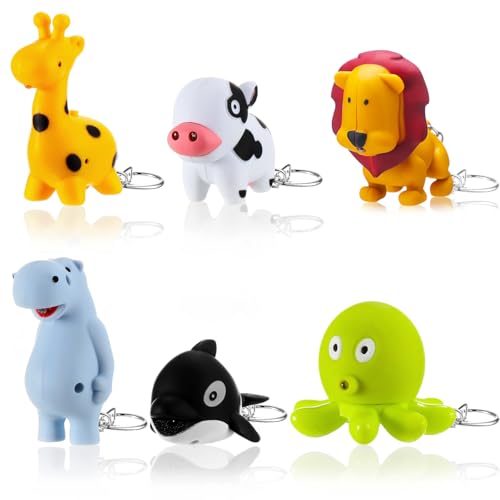
The Kenning set has six small LED flashlights shaped like a pig, an octopus, a cow, a hippo, a giraffe and a whale. A press on the button turns each light on, and a keyring lets it hang from a badge reel, a stethoscope or a set of keys. These are not diagnostic penlights with a pupil gauge, so a pediatrician will still use the clinic's otoscope and penlight for the real exam. The animal lights earn their place in the minutes around it: a light-up whale to follow with the eyes, a pig to hold during a shot. Six in a pack means the doctor can hand extras to the nurses down the hall.
Pros
- Six animal designs
- Clips to a badge or stethoscope
- Enough to share with the team
Cons
- No pupil gauge, so not a medical penlight
- Small batteries to replace
Best for: pediatricians and peds nurses who like a light on the badge
SmileMakers lists these stickers as doctor office giveaways, and they come 100 to a pack in five designs with Lightning McQueen, Mater, Sally, Luigi and Guido. Each sticker has room to note the child's height and weight, which turns the numbers from a well visit into something a kid wants to show at home. The listing says the stickers are hypoallergenic and latex free. Most pediatric offices buy stickers in bulk already, so this works best as a small add-on to a card or a box of treats for the front desk. A hundred stickers go fast in a busy practice, and some kids will ask for a different character.
Pros
- Made for doctor offices
- Space for height and weight
- Latex free
Cons
- A busy office uses 100 fast
- Only one character set
Best for: pediatricians who end every well visit with a sticker
Acekid's set holds ten small plush finger puppets: a mouse, cow, hippo, bear, rabbit, duck, panda, dog, frog and elephant. The listing calls the fabric soft velvet plush. Pediatricians spend a lot of a visit earning trust from a child who did not ask to be there, and a frog on one finger says hello faster than words do. Ten puppets let a doctor keep a few in each exam room. Plush toys pass through many small hands, so the pediatrician will want to wash them or treat them as giveaways, depending on the office's infection control rules. They are cheap enough that a few going home with patients is fine.
Pros
- Ten animals for several rooms
- Soft and light
- Cheap enough to give away
Cons
- Plush needs regular washing
- Check the office's toy policy
Best for: pediatricians who see babies and toddlers
This pack holds six 2-ounce tubes of Neutrogena's Norwegian Formula hand cream, a concentrated glycerin cream with no fragrance. The listing calls it non-greasy and unscented. A pediatrician washes or sanitizes before and after each child, which adds up to dozens of times on a full clinic day, and dry, cracked knuckles follow. Fragrance free matters here: a doctor who holds newborns and examines kids with asthma or eczema should not smell like a candle. Six tubes let the doctor stash one in each spot they work. It is a practical gift and not a thrilling one, so pair it with a card or a coffee.
Pros
- Fragrance free for a room full of kids
- Six tubes to spread around
- Small enough for a coat pocket
Cons
- Not exciting on its own
- Thick glycerin takes a minute to sink in
Best for: pediatricians with hands dried out by constant washing
The BAGSMART lunch bag has two insulated decks in a quilted puffer shell. It measures about 10 by 7 by 10 inches, weighs about a pound and has a PEVA lining that the listing calls leakproof. A strap that adjusts to 48 inches comes off when the doctor wants a handbag-style carry. The Bureau of Labor Statistics notes that many physicians work long shifts, and in a pediatric clinic lunch often happens in two bites between a fever and a sports physical. Splitting the meal and the snacks into two decks makes grazing easier. The puffer look will not suit every doctor, and the bag is too small for a full day of meals on a hospital call shift.
Pros
- Two insulated sections
- Removable strap
- Light at about a pound
Cons
- Puffer style is not for everyone
- Small for a 24-hour call
Best for: pediatricians who eat between patients
This 11-ounce white ceramic mug reads Today's Goal: Keep the Tiny Humans Alive. The listing says it is microwave and dishwasher safe and ships in its own box, so it is ready to hand over. The seller markets it to new parents too, but the joke lands hardest with someone who spends the day on ear infections, croup and well-baby checks. It is a classic Secret Santa gift for a pediatric office, cheap enough for a $15 limit. The humor is gentle and will not upset a parent who sees it on the doctor's desk. It is still a mug, and many pediatricians already own a shelf of them.
Pros
- Gentle joke parents will smile at
- Gift box included
- Microwave and dishwasher safe
Cons
- Many doctors own plenty of mugs
- Only 11 ounces
Best for: pediatricians with a dry sense of humor
Ciciron prints this white ceramic mug in the USA with Best Pediatrician Ever, a heart drawn in stethoscope tubing and whatever name the buyer types in. It comes in 11 or 15 ounces. A name turns a generic doctor mug into something that belongs to one person, which helps in a practice where five pediatricians share a break room and a cabinet of anonymous cups. Nurses, residents and families who want to say thanks all find it easy to give. Personalized orders take extra days to make, so order well ahead of Doctors' Day or Christmas. Check the spelling of the name and the credentials twice before you submit.
Pros
- Doctor's name on the mug
- Two sizes
- Printed in the USA
Cons
- Needs extra time to make
- Typos are on the buyer
Best for: a thank-you from nurses, residents or a grateful family
MDpocket's Pediatric Edition is a small reference book built to live in a white coat or scrub pocket. The listing mentions quick tabs, laminated covers and pages that bend back 180 degrees, so the book stays open on a counter. After medical school, the Bureau of Labor Statistics notes, doctors spend years in internship and residency depending on the specialty, and those years are full of nights when a resident needs a dose or a normal value in ten seconds. A pocket book still helps when the hospital network is slow. Many residents use phone apps, so ask before buying, and check the edition year so the gift is current.
Pros
- Fits a coat pocket
- Laminated for heavy use
- Tabs for quick lookup
Cons
- Some residents prefer apps
- Dated edition needs replacing
Best for: pediatric residents and interns