Seven retractable Pilot FriXion gel pens in assorted colors with a 0.7 mm tip. The ink is thermo-sensitive, so the rubber end erases it cleanly without tearing the page. An English teacher writes comments on essays by the hundred, and margin notes sometimes need a second draft: a misread sentence, a grade that changed after the conclusion, a comment that came out harsher than intended. Seven colors also make a simple code for thesis, evidence and mechanics. The pens are refillable. One caution from the listing's own description: heat makes the ink disappear, so a stack left in a hot car may come back blank. Keep final grades in regular ink.
Pros
- Fix comments without a mess
- Seven colors for a marking code
- Refillable
Cons
- Heat can erase the ink
- Not for permanent records
Best for: grading essays in color
Five Zebra Mildliner highlighters in soft assorted colors, each with a broad chisel tip for highlighting and a fine bullet tip for underlining or writing in a margin. The listing describes the ink as no-bleed on thin pages and water resistant once dry, so colors layer without smearing. English teachers annotate the same novels year after year, and muted colors are easier on the eyes than neon over a long weekend of rereading. Teachers who already love Mildliners always want more, since they disappear from a desk. The pack is small, so it works best as an add-on with a card or a book, or as a stocking stuffer from a student.
Pros
- Two tips in one pen
- Soft colors that layer
- Low cost add-on
Best for: annotating class novels
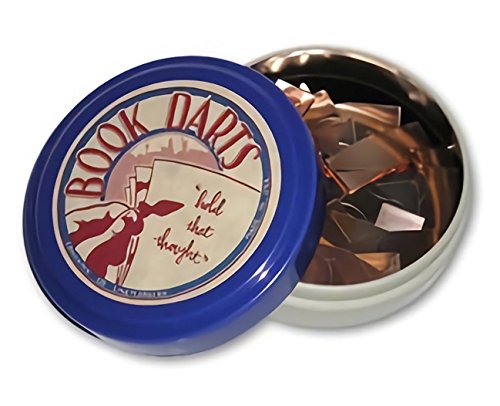
A tin of 125 thin metal clips that slide onto a page and point at a single line of text. For an English teacher leading a discussion of Gatsby or Macbeth, the difference between a sticky flag and a dart is the difference between finding the page and finding the sentence. The darts stay put when a book goes into a bag, and the listing says they leave no dog-ears or smudges, so they work in a copy the teacher has taught from for ten years. They come in a small tin that wraps well. At 125 per tin, one gift lasts through a few novels. They are small and easy to drop, so keep the tin close.
Pros
- Points at the exact line
- Stays put in a bag
- Small tin that wraps well
Best for: teachers who quote passages in discussion
A rechargeable reading light that hangs around the neck, with two bendable arms that point the beam at the page. It has three color temperatures from warm yellow to cool white and six brightness levels, charges by USB-C and, per the listing, runs up to 80 hours. The narrow 90-degree beam is meant to light the page without waking a partner. For an English teacher, it covers the two jobs that happen after dark: rereading tomorrow's chapter and grading essays at the kitchen table, with both hands free for the pen. Some people find anything around the neck uncomfortable after an hour, so it suits a reader who already likes book lights.
Pros
- Hands stay free for grading
- Long battery life
- Warm light for night reading
Cons
- Not everyone likes wearing it
Best for: grading and rereading at night
A 12-inch Time Timer with a red disk that shrinks as the 60 minutes pass, so students see how much time is left at a glance. English teachers run timed essays, quick-writes and AP practice tests, and a visual timer cuts down on the constant question of how long is left. This model is magnetic, so it sticks to the whiteboard, runs without loud ticking and has an alarm the teacher can switch off. It comes with a dry-erase activity card and takes two AA batteries, which are not included. Many teachers use a phone timer, so this suits one who runs a lot of timed writing and wants something the whole room can read.
Pros
- Whole room sees the time left
- Silent with an optional alarm
- Sticks to the whiteboard
Cons
- Batteries not included
- Big for a small desk
Best for: timed writing and test prep
Authors is a card game the listing dates to 1861. The 52 cards show color portraits of 13 classic writers, each with four of their best-known works, and players collect sets of four, much like Go Fish. For an English classroom it is an easy review game on the last day before break, a station during a literature unit or a quiet option for early finishers. Students meet authors they will read later. The writer list is classic and leans old, so it will not cover a modern or diverse reading list, and a teacher may want to add a talk about who is missing. It costs very little, which makes it an easy student gift.
Pros
- Cheap and easy to learn
- Works as a review station
- Introduces classic authors
Cons
- Author list is old and narrow
Best for: review days and book clubs
More than 200 magnetic word tiles drawn from Shakespeare's works, in a small 4.75-by-3-inch box made in the USA. On a classroom whiteboard or the side of a metal filing cabinet it becomes a poetry station: students drift over before the bell and leave a couplet behind. During a Shakespeare unit it gives students a way into the vocabulary that does not start with a footnote. The tiles match the size of other Magnetic Poetry kits, so it adds to a set the teacher already has. On a non-magnetic whiteboard it will not stick, and tiles wander off in a busy room, so expect to lose a few.
Pros
- Turns a whiteboard into a poetry station
- Shakespeare vocabulary
- Made in the USA
Cons
- Needs a magnetic surface
- Tiles go missing
Best for: a Shakespeare unit or poetry month
A 14-ounce ceramic mug from the Unemployed Philosophers Guild, covered in 30 insults from Shakespeare's plays in different fonts and colors. English teachers know the trick: students who tune out the soliloquies perk up at a good Shakespearean insult, and a mug on the desk invites them to read a few. It comes in a printed gift box, so it is ready to hand over, and the listing says it is dishwasher safe. Many English teachers own a literary mug or two, but this one gets used in class as much as in the staff room. Some insults are crude by modern standards, which is part of the fun and worth knowing for a younger grade.
Pros
- Ready-made class conversation starter
- Comes in a gift box
- Dishwasher safe
Cons
- A few insults are crude for younger students
Best for: Shakespeare units and the staff room
A self-inking stamp from ExcelMark that prints an apple, the words From the Classroom Of and the teacher's name, in one of 11 ink colors. Most English teachers build a classroom library, and many buy the books themselves at yard sales and with their own money. The books go home with students and do not always come back. A stamp inside the front cover gives a book a better chance of returning and makes it easy to sort the teacher's books from the school's. The medium size fits paperbacks. The pad is refillable and the listing promises thousands of impressions. Allow a few days for the seller to make it, and check the spelling of the name.
Pros
- Marks every classroom library book
- 11 ink colors
- Refillable pad
Best for: teachers with a classroom library
Amazon's Kindle Colorsoft has a 7-inch color e-paper display, so book covers show in color and highlights come in yellow, orange, blue, pink and green. That matters to an English teacher who codes annotations by theme or character, the same way they would with highlighters on paper. The screen shifts from white to amber for reading at night, and the listing rates a single USB-C charge at up to eight weeks. Many novels taught in high school are in the public domain, so a teacher can carry the whole syllabus in one bag. It costs more than a coworker gift and fits a family or a class collection. A teacher who loves paper may prefer the box set below.
Pros
- Color highlights for annotation
- Long battery life
- Whole syllabus in one device
Cons
- Some English teachers prefer paper
- Costs more than a coworker gift
Best for: teachers who read and annotate on a screen