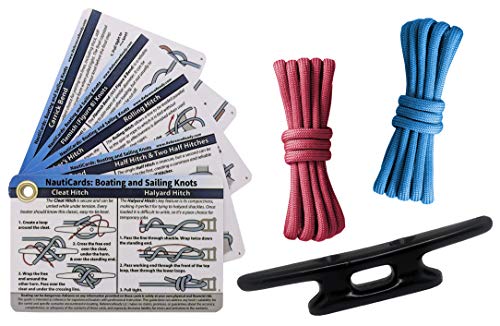
A practice kit for 20 common boating and sailing knots: two 3-foot lengths of 550 cord in different colors, a 4-inch nylon horn cleat and a set of waterproof, credit-card-size knot cards with color-coded diagrams that match the cord. The cleat is the clever part, since cleating a line is one of the first things a deckhand gets corrected on. The Bureau of Labor Statistics says sailors and deckhands learn on the job for one month to a year, and knots come up from day one. The kit fits in a sea bag or a galley drawer. An old salt will know every knot in it, so it lands best with a new hire, a student or a recruit.
Pros
- Cleat for real practice
- Waterproof cards
- Small enough for a sea bag
Cons
- Too basic for veterans
- Short practice cords
Best for: new deckhands, sailing students and Navy recruits
A rechargeable headlamp with two jobs. The 660-nanometer red mode, with four brightness levels, protects night vision on deck and lets a sailor move through a dark berthing space without waking the rack next door. The white side reaches 500 lumens for real work. It charges by USB-C, carries an IPX6 water rating for rain and spray, and locks against accidental switching. The Bureau of Labor Statistics lists standing watch as part of a deckhand's job, and watches run through the night. One quirk: the listing says to press the switch four times on first use to unlock it, so mention that in the card. IPX6 handles heavy spray, not a dunk over the side.
Pros
- Red mode for night vision
- 500-lumen white for work
- USB-C and IPX6
Cons
- Unlock step confuses at first
- Not submersible
Best for: night watches and dark berthing
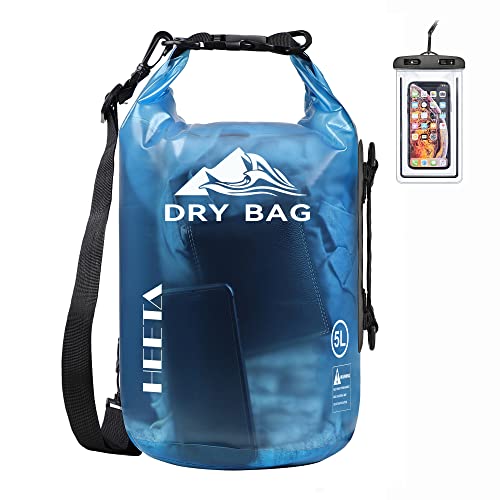
A 10-liter roll-top dry bag in clear PVC, thicker at the bottom, with adjustable backpack straps and a side handle. The clear body means you can find the sunglasses or the sandwich without unpacking everything. A waterproof phone case with a touchscreen window comes in the box. The Bureau of Labor Statistics notes that water transportation workers may be exposed to all kinds of weather, and on a sailboat or a launch, everything in a regular bag gets wet. The listing says it handles accidental submersion but is not meant to stay underwater. At 10 liters it fits a day's gear, not a full sea bag, so pick a larger size for longer trips.
Pros
- Backpack straps
- Clear body, easy to find things
- Phone case included
Cons
- Day size only
- Not for long submersion
Best for: sailing crews and harbor workers
A digital sports watch from Casio with a tide graph and moon phase on the face, water resistance to 100 meters and an LED light for night watches. It adds three alarms, dual time, a stopwatch and a countdown timer, which cover watch changes, a second time zone in port and race starts for sailing crews. Tide timing matters to anyone who brings a boat in over a bar or works a harbor. A watch keeps that on the wrist instead of in a phone that has to stay dry. The tide graph needs setting for your local port, so expect a few minutes with the manual. It looks like what it is, a resin sports watch.
Pros
- Tide graph and moon phase
- 100 m water resistance
- Alarms for watch changes
Cons
- Tide setup takes time
- Plain resin look
Best for: sailors who work tides and keep watches
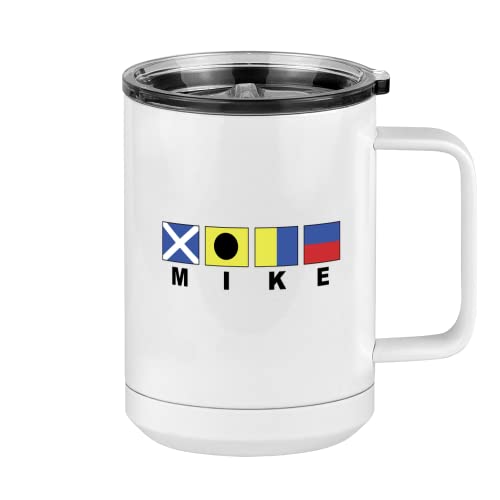
A 16-ounce double-wall tumbler with a magnet in the base, paired with a silicone pad that holds a second magnet and 20 micro-suction cups. Stick the pad to a smooth surface and the tumbler snaps onto it, which keeps a hot drink upright on a rolling boat. It comes with a lid. The listing is clear that the suction needs smooth, non-textured surfaces, so non-skid deck paint and rough fiberglass will not work; a console, a galley counter or a chart table will. Anyone who has watched coffee slide across a wheelhouse will see the point at once. It is a better gift than another plain tumbler because it solves a problem only people on boats have.
Pros
- Holds on a moving boat
- Insulated with a lid
- Made for boats
Cons
- Needs a smooth surface
- Base takes space
Best for: a sailor's coffee on deck or in the wheelhouse
Reusable silicone earplugs with a ring-shaped design, rated at 24 dB of noise reduction and sold with four ear tip sizes, XS through L, so the fit problem is solved in the box. A small carry case keeps them out of the bottom of a sea bag. The Bureau of Labor Statistics notes that crews on deep-sea ships and barges can spend weeks or months aboard, working seven days a week, and sleep in a shared space near machinery is the daily challenge. These are made for sleep and focus, not as rated hearing protection for an engine room. Some people never get used to earplugs at all, so this suits a sailor who already uses foam ones.
Pros
- Four tip sizes included
- Reusable with a case
- Comfortable for side sleepers
Cons
- Not for engine room protection
- Not for everyone
Best for: sleeping near engines and in shared berths
A build-your-own ship in a bottle kit that makes a model of the USS Constitution, made in the United States, with a step-by-step guide written for beginners. Building ships in bottles is an old sailor's pastime, and it suits the quiet hours a sailor has between voyages, on shore leave or in a long winter layup on the Great Lakes. The finished piece sits on a desk or a shelf as a reminder of the work. It takes patience and small, careful hand work, so it fits a sailor who likes projects more than one who wants to relax with a book. It is a home project rather than something to build in a rolling berth, and the kit makes one model.
Pros
- Classic sailor hobby
- Beginner instructions
- Finished model makes a display piece
Cons
- Needs patience and a steady table
- One model per kit
Best for: a sailor's winter or shore-leave project
A solid brass pocket compass with an antique patina, a copper compass rose and a red-tipped needle. The lid or inside cover takes a custom engraving, such as a name, a date or a vessel. It ships in a Stanley London gift box. For a sailor, a compass carries meaning that a plaque does not, and it suits the moments the job marks: a Merchant Mariner Credential or a new endorsement, a promotion, a transfer or a retirement. The listing also offers an upgraded hardwood box. This is a keepsake, not a navigation tool to rely on at sea, and the engraving adds a few days, so order early.
Pros
- Engraved with a name or date
- Solid brass in a gift box
- Fits sailor milestones
Cons
- Keepsake, not a working compass
- Engraving takes time
Best for: a promotion, a new credential or a retirement
A 6-watt handheld marine VHF radio with switchable 1, 3 and 6 watt power, a day and night display, and a high-visibility orange core that floats if it goes over the side. Tri-Watch mode monitors channels 9 and 16 and one channel of your choice at once, and the radio receives NOAA weather channels and emergency alerts. For a recreational sailor, a handheld is the backup when the fixed radio fails or the dinghy goes ashore. Professional mariners usually have radios provided aboard, so this fits best for a sailor's own boat. A handheld has less range than a mounted radio, and some sailors want DSC and GPS, which this model does not list.
Pros
- Floats with a bright core
- Tri-Watch for 9 and 16
- NOAA weather alerts
Cons
- Shorter range than a fixed radio
- No DSC or GPS listed
Best for: a recreational sailor or small-boat skipper
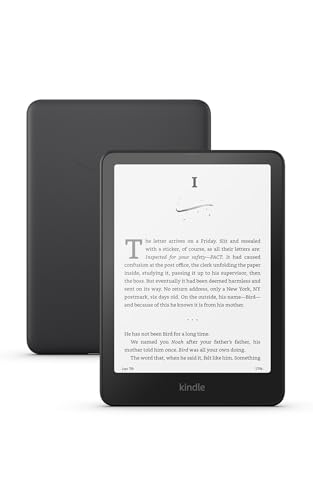
Amazon's Kindle Paperwhite has a 7-inch glare-free screen that reads in bright sun or in the dark, a display that shifts from white to amber at night and, per the listing, up to 12 weeks of battery on one USB-C charge. It has no social media or notifications. The Bureau of Labor Statistics says crews on barges and deep-sea ships may spend weeks or months away from home, and a sailor's locker has no room for a stack of books. Load books before leaving port. The listing does not mention water resistance, so keep it in the berth, not on deck. Family is the right giver at this price.
Pros
- A library in a locker
- Weeks of battery
- Readable in sun and dark
Cons
- Not for deck use
- Books need loading before sailing
Best for: long voyages and deployments