A set of two refillable mechanical carpenter pencils with 26 leads, a sharpener built into each cap and a plastic case. The long 45 mm nose reaches into a hole or a tight corner, the spot where a flat pencil fails on hinge mortises, outlet cutouts and blocking. The 2.8 mm lead is thick enough that it does not snap under a tape hook, and the listing says it marks wood, metal and plastic. A carpenter who chews through a box of flat pencils a month will still keep some around for rough framing, so treat this as the trim and layout pencil. Refills cost little and the case keeps them together in the truck.
Pros
- Long tip reaches into holes and tight corners
- Sharpener rides in the cap
- Spare leads included
Cons
- Some framers still prefer a flat pencil for rough lumber
Best for: framers and trim carpenters who mark all day
A 12-inch combination square with a machined zinc head, an etched stainless blade, a brass scriber and a brass locking bolt. The Bureau of Labor Statistics lists squares first among a carpenter's hand tools, and a combination square handles the most jobs of any of them: 90 and 45 degree marks, depth checks, a quick test for square on a cabinet box. The listing says the acrylic vial holds up to drops better than tube-style vials, which matters for a tool that rides in a bucket. A carpenter who already owns a beat-up square will still use a clean, true second one at the bench. A machinist-grade Starrett costs several times more, so this is the right size of gift from a coworker.
Pros
- Covers 90, 45 and depth layout in one tool
- Brass scriber and locking bolt
- Sized for the finish bench
Cons
- Zinc head, not cast iron
- Many carpenters already own one
Best for: finish and trim carpenters
The Construction Master Pro is the feet-inch-fraction calculator many framers keep on the dash. It adds and divides in the units on the tape, so 14 feet 7 and 3/8 inches divided by 3 comes out as a dimension instead of a decimal. Built-in functions cover rafters (common, hip, valley, jack), stair layout, rake walls, arcs, board-foot lumber, studs, drywall and concrete footings. The box includes a hard case, a pocket reference guide and two batteries. A carpenter who does math on a phone app may not switch, and the top of the coworker budget is a lot for a calculator. For a lead carpenter who bids and lays out stairs, it saves real time.
Pros
- Works in feet, inches and fractions
- Rafter and stair layout built in
- Case and reference guide included
Cons
- Near the top of a coworker budget
- Phone apps cover some of the same math
Best for: framers, roofers and carpenters who bid jobs
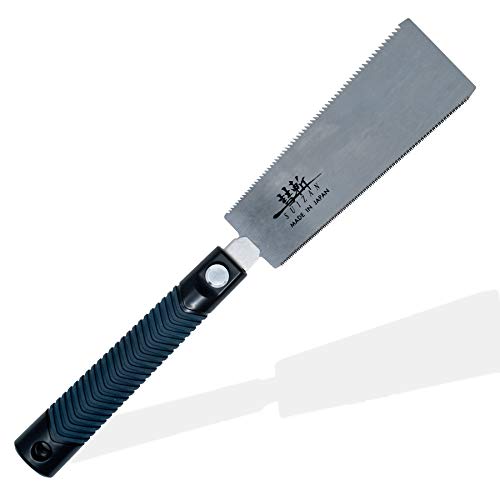
A 7-inch double-edge ryoba saw made in Tsubame-Sanjo, Japan, with rip teeth on one edge and fine crosscut teeth on the other. The saw cuts on the pull stroke, so the 0.5 mm blade stays straight and leaves a narrow kerf for trim, door casing, shims and flush-cut dowels. Many trim carpenters keep one in the bag for the cuts a miter saw cannot reach, like trimming a jamb in place. The blade comes off with a hand screw and a replacement blade slides in. The teeth are sharp and brittle, so a carpenter who uses it to cut nails will chip it. Pick it for someone who does finish work, since rough framers rarely reach for a hand saw.
Pros
- Two tooth patterns in one blade
- Thin kerf for trim and flush cuts
- Replaceable blade
Cons
- Teeth chip on nails
- Less use for rough framers
Best for: trim carpenters and cabinet installers
A 6-1/4-inch low-angle block plane with a ductile iron body, an O1 tool steel blade and adjustable depth and mouth. A finish carpenter uses a block plane to ease a door that rubs, chamfer an edge, or take a shaving off a scribe so trim sits tight. The low angle handles end grain better than a standard angle plane, and the size fits in a tool bag. The listing says the body is drop-tested, which helps on a jobsite. Expect to hone the blade before first use, as with most planes at this level. A woodworker with a Lie-Nielsen will not need it, but a carpenter without a block plane will use it in the first week.
Pros
- Low angle for end grain
- Fits in one hand and a tool bag
- Adjustable mouth
Cons
- Blade needs honing out of the box
Best for: door hangers and trim carpenters
A 10-pocket nail and tool bag in reversed top grain leather, with two large nail pockets, two upper pockets and six small ones for a nail set, pencils and pliers. Double gussets keep the front pockets open, so a framer can grab nails without looking. A steel hammer loop and a metal tape clip round it out. It slides onto a belt up to 2-3/4 inches wide, so it needs no size, but it does not include a belt. Leather bags break in over months, and a new one feels stiff at first. A carpenter whose current bag has a hole in the bottom will be glad to see it.
Pros
- Ten pockets with wide-open gussets
- Steel hammer loop and tape clip
- No size to guess
Cons
- Belt not included
- Stiff until broken in
Best for: framers who need a new nail bag
A pair of work knee pads with a thick gel insert over high-density foam, a heavy-duty PVC cap and hook-and-loop straps with a thigh support design. The Bureau of Labor Statistics notes that carpenters alternate between lifting, standing and kneeling, and a day of setting floor or installing base puts all the weight on two knees. The straps adjust, so the pads need no size, and the listing names carpentry and flooring as intended uses. The hard cap slides on a subfloor, which suits moving along a wall. Some carpenters find strap pads hot in summer, and a few prefer pads built into their work pants.
Pros
- Gel and foam cushion
- Adjustable straps, no size
- Hard cap slides on subfloor
Cons
- Warm in summer
- Straps can rub on a long day
Best for: flooring installers and trim carpenters
A pair of passive over-the-head earmuffs from 3M's Peltor X Series. They use foam earcup inserts, wide foam ear cushions, tilting pivots and a twin headband with a stainless steel wire that the listing says keeps consistent force over an 8-hour day. Circular saws, nail guns and compressors run all shift on a framing crew, and earplugs fall out of dusty hands. These hang on a belt hook between cuts and go back on in a second. They are passive, with no radio or Bluetooth, and the listing gives two different noise ratings, so check the box for the exact number. For music on the job, see the WorkTunes in the premium section.
Pros
- Comfortable for long shifts
- Twin headband vents heat
- Easy on and off between cuts
Cons
- No radio or Bluetooth
- Listing quotes two different noise ratings
Best for: framers and anyone running saws all day
A 16 oz claw hammer with a beech handle engraved with the text you choose, plus a magnetic black steel head that holds a nail in place for one-handed starts. The gift box has a foam insert and adds a 4-inch magnetic level, a 5-foot tape and 100 nails in two sizes. A working framer will keep their own framing hammer on the belt, since weight and balance are personal. This set works best as a keepsake that still gets used: a first hammer for an apprentice with a start date, a retirement gift with years of service, or a hammer for the home shop. Order early, because the seller engraves each handle.
Pros
- Engraved handle with your own text
- Arrives in a gift box with extras
- Magnetic head starts nails one-handed
Cons
- Framers keep their own hammer for daily work
- The extra tape and level are small
Best for: retirements and apprentice graduations
Kreg's 720PRO is a bench pocket-hole jig with clamping that adjusts to the board, for material from 1/2 to 1-1/2 inches thick. Pocket-hole joinery drills an angled hole and drives a screw, which is how many carpenters build cabinet boxes, face frames, shelves and built-ins without clamps and glue-up time. The drill guide has an anti-slip surface. This is a home-shop and cabinet tool more than a framing tool, so it fits a carpenter who builds furniture or built-ins on weekends. A carpenter who already owns an older Kreg jig may not need a second one, so ask the spouse before the crew chips in.
Pros
- Quick clamping that sets itself
- Fast joinery for cabinets and built-ins
- Strong, known brand
Cons
- Less use for rough framers
- Many woodworkers already own a Kreg
Best for: cabinet and built-in carpenters